
Knowing how to buy an ultra-premium domain requires a structured acquisition process: define criteria, verify ownership, negotiate through a broker or directly with the seller, and close the transaction through a licensed escrow service before the registrar transfer is finalized. This process typically spans four to twelve weeks depending on the domain’s value tier and the seller’s responsiveness. Skipping any one of these stages, particularly ownership verification or escrow, exposes buyers to fraud, legal disputes, or an incomplete transfer.
Every year, thousands of businesses discover too late that a great domain name was available all along, just not to them, because someone else moved first. Buying an ultra-premium domain is not like registering a fresh .com through a retail registrar; it’s a negotiated acquisition that resembles purchasing intellectual property or a piece of digital real estate. If you’re exploring ultra-premium domain names for your next brand, product launch, or portfolio investment, understanding the full acquisition process, from initial research to the final secure transfer, is what separates buyers who close good deals from those who overpay, get stalled in negotiations, or lose the domain entirely to a faster-moving competitor.
This guide walks through exactly how to buy an ultra-premium domain, step by step, with the practical insights, common pitfalls, and expert tactics that experienced domain buyers rely on.
What is an Ultra-Premium Domain Name?
An ultra-premium domain name is a short, brandable, keyword-rich, or otherwise highly desirable web address that already exists in someone else’s ownership, as opposed to an available name you can register directly through GoDaddy, Namecheap, or a similar registrar. Ultra-premium domains are typically:
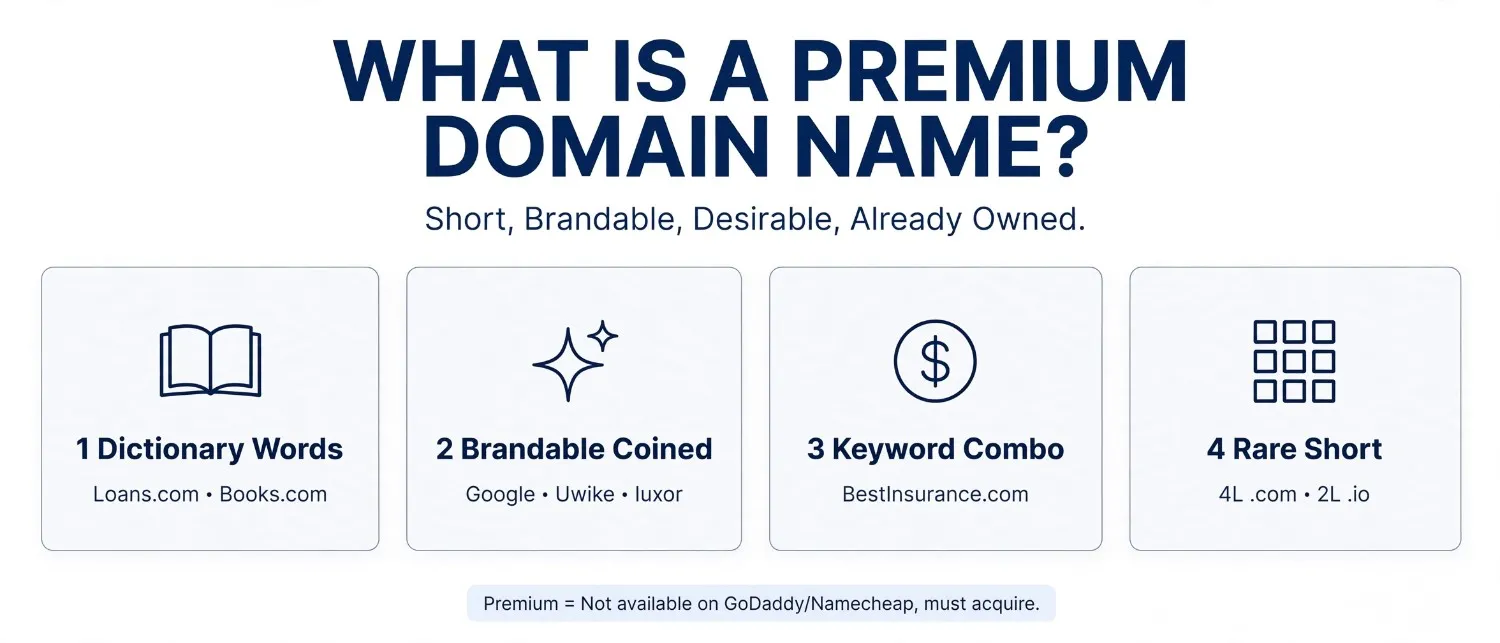
- Single dictionary words (Loans.com, Books.com)
- Short, brandable coined terms (Google, Uwike, Iuxor-style names)
- High-value keyword combinations (BestInsurance.com)
- Rare short character strings (four-letter .com domains, two-letter .io domains)
Because these names are already owned, acquiring one means negotiating a purchase rather than simply registering it. This is the fundamental distinction that shapes the entire process described below.
Why Buy an Ultra-Premium Domain Instead of Registering a New One?
Before diving into the mechanics, it helps to understand the strategic reasoning. An ultra-premium domain typically offers:
- Instant credibility with customers and investors
- Stronger direct-navigation traffic, since people type the obvious name into their browser
- Better memorability, which reduces marketing spend over time
- Long-term brand equity, since the domain itself can appreciate in value
If you want a deeper look at how a domain name shapes customer perception before they’ve seen anything else about your business, this piece on how premium domains build brand credibility breaks down the psychology in detail. Domains in this category aren’t just addresses; many buyers treat them as an investment-grade asset class in their own right, which is part of why competition for the best names has intensified so sharply over the past decade.
The Complete Step-by-Step Process for How to Buy an Ultra-Premium Domain
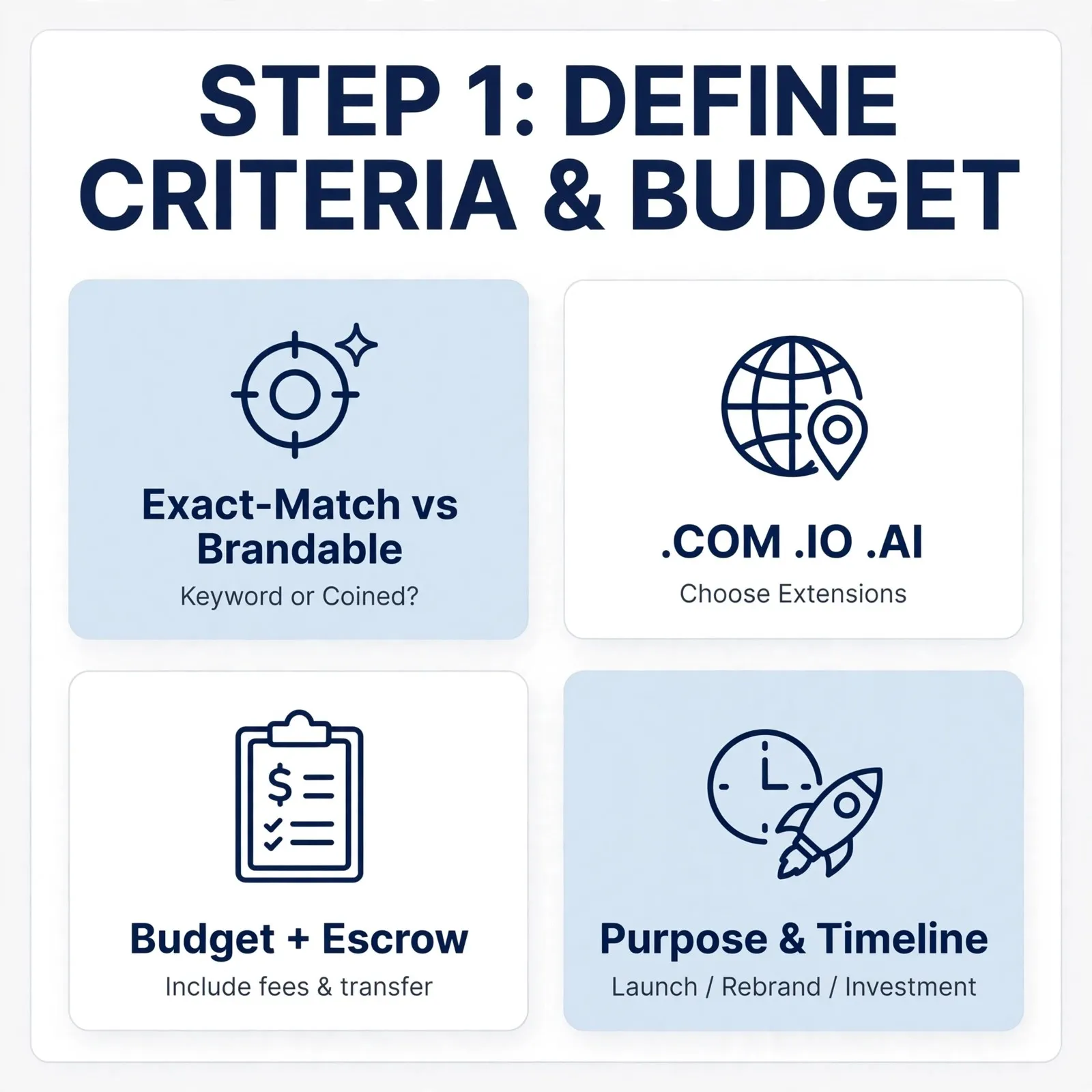
Step 1: Define Your Acquisition Criteria and Budget
Before you contact a single seller, get specific about what you actually need. Vague criteria lead to wasted outreach and rushed decisions later.
Ask yourself:
- Does the domain need to be an exact-match keyword, or is a brandable name acceptable?
- Which extensions are acceptable: .com only, or are .io, .ai, or ccTLDs on the table?
- What is the maximum budget, including transfer and escrow fees?
- Is this for a new brand launch, a rebrand, or a portfolio investment?
- How urgent is the timeline?
Buyers who skip this step tend to fall in love with a name mid-negotiation and lose their pricing discipline entirely. Setting the ceiling before you start talking to sellers is one of the simplest ways to protect yourself.
Step 2: Research and Discovery
Once your criteria are locked in, the research phase begins. There are several parallel channels worth checking:
- Domain marketplaces, where curated ultra-premium inventory is listed with asking prices or “make an offer” options
- Domain brokers, who often have access to unlisted or off-market names through their networks
- Direct outreach, where you identify a domain you want and contact the current owner even if it isn’t publicly for sale
- Aftermarket auction platforms, useful for names that are being actively sold at auction rather than fixed price
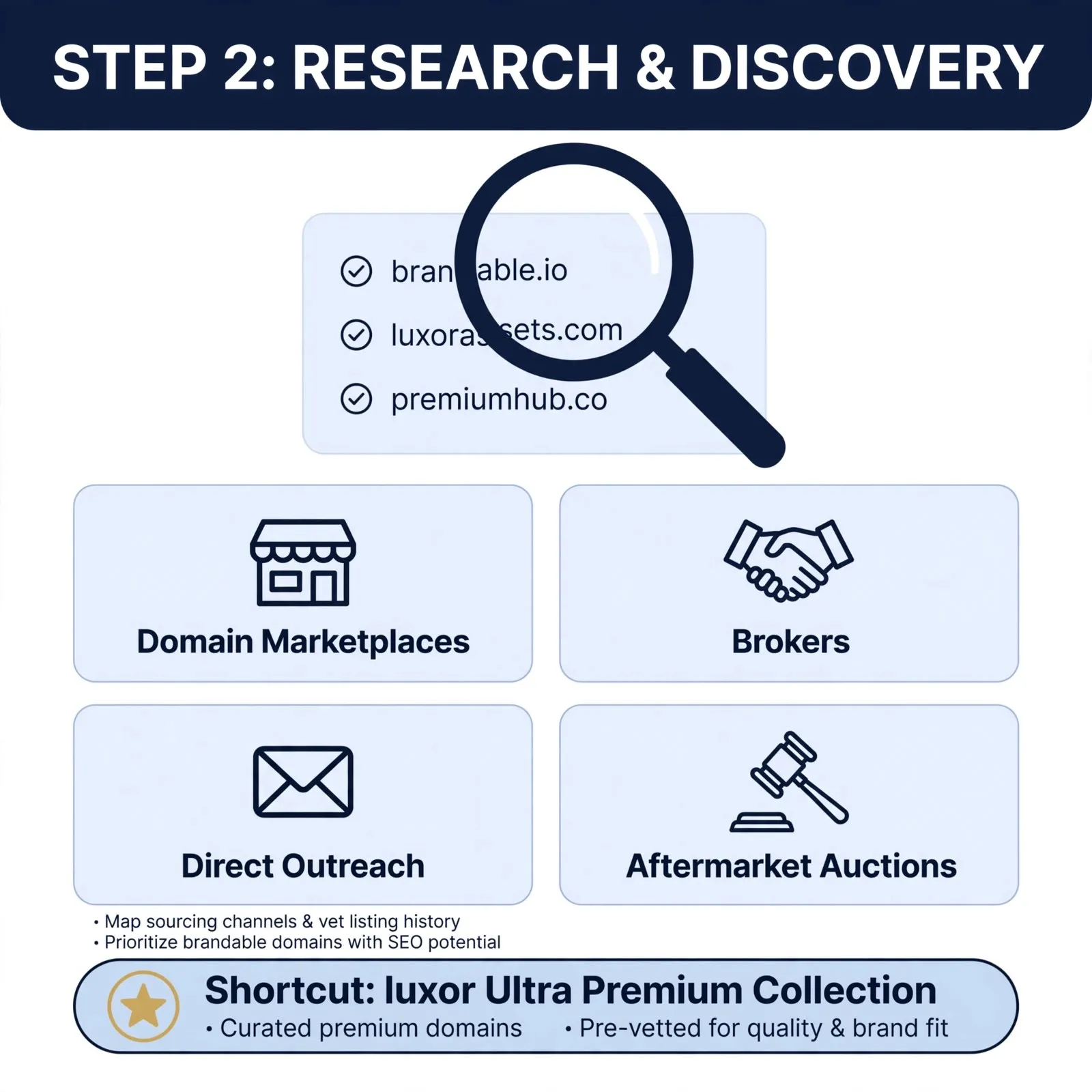
A well-organized marketplace like IUXOR’s ultra premium domains for sale collection can shortcut a lot of this research, since names are already vetted, priced, and categorized rather than scattered across dozens of individual seller sites.
Step 3: Domain Valuation and Comparable Sales Analysis
This is where many first-time buyers get it wrong: they either assume the seller’s asking price is fair, or they lowball based on gut feeling rather than data. Instead, treat this like any other asset valuation.
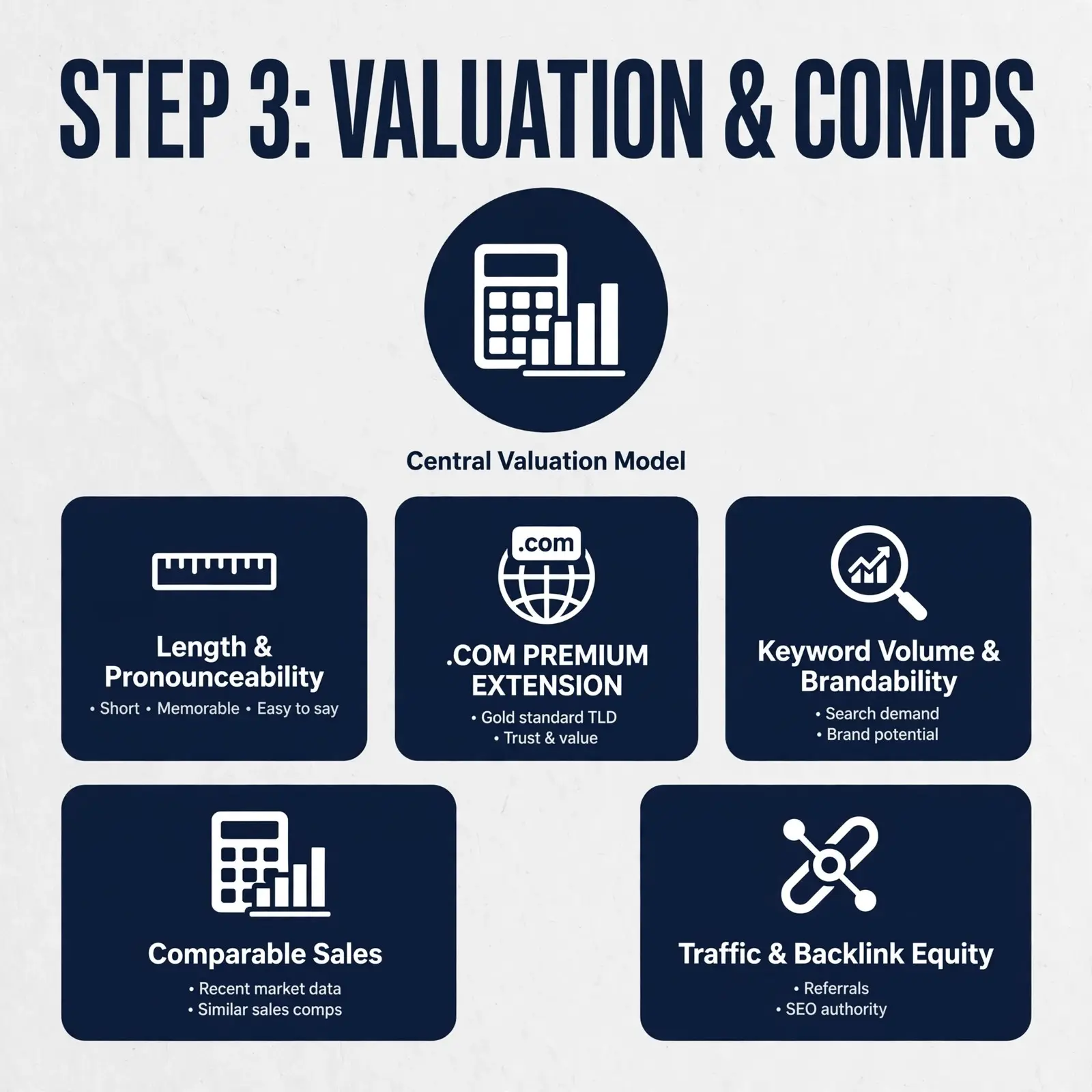
Key valuation factors include:
- Length and pronounceability
- Extension (.com generally commands the highest premium)
- Exact-match keyword volume and commercial intent
- Brandability and memorability
- Comparable sales of similar names in the same category
- Existing traffic or backlink equity, if any
For a full technical breakdown of how appraisers and brokers actually calculate these numbers, this article on the technical and market factors that determine domain valuation is worth reading before you make an opening offer.
Step 4: Ownership Verification
Never begin serious negotiations before confirming who actually owns the domain and whether it’s legally clean to acquire. This step protects you from three real risks: buying from someone who isn’t the true owner, buying a name with an active trademark conflict, or buying a domain that’s tied up in a dispute.
Verification checklist:
- Run a WHOIS lookup to confirm the registrant and registrar
- Check the domain’s registration and expiration history
- Search relevant trademark databases for potential conflicts
- Review whether the domain has any history of prior disputes or UDRP complaints
- Confirm the domain isn’t currently listed for sale with multiple, conflicting brokers
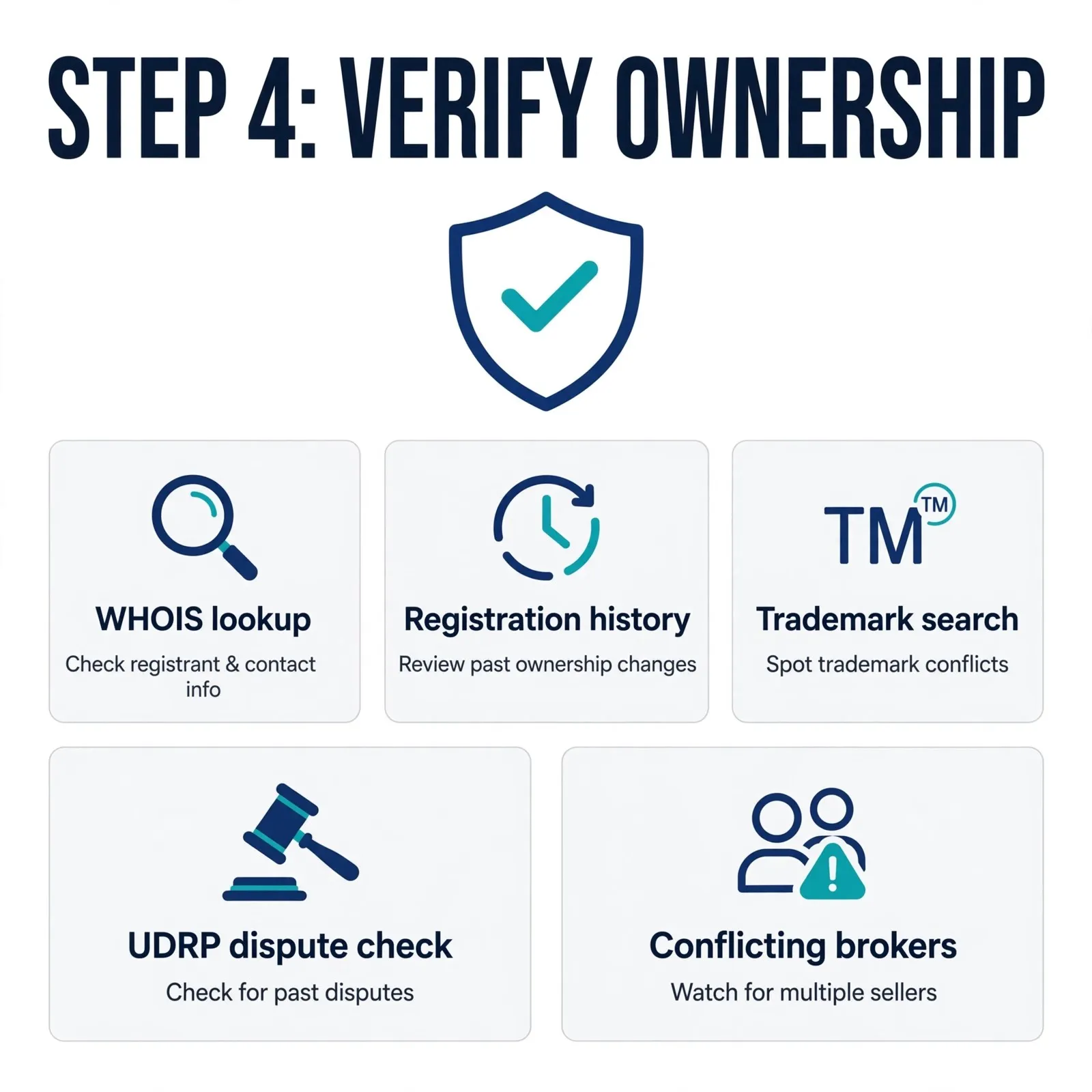
Skipping trademark verification is one of the more expensive mistakes buyers make, since acquiring a domain that infringes on an existing mark can result in a costly dispute even after you’ve paid for it.
Step 5: Outreach and Negotiation
With research and verification done, it’s time to make contact. If you’re going through a marketplace or broker, this step is largely handled for you; if you’re approaching an owner directly, tone matters enormously.
Practical negotiation tips:
- Lead with a real offer, not a vague “would you consider selling?” message; sellers who own valuable names get these constantly and often ignore non-committal inquiries.
- Anchor with data, referencing comparable sales rather than emotional reasoning.
- Expect a counter, since almost no ultra-premium domain sells at the first quoted price.
- Use a broker for high-value names, since experienced brokers can often secure better terms and keep the conversation professional when direct owner-to-buyer talks stall.
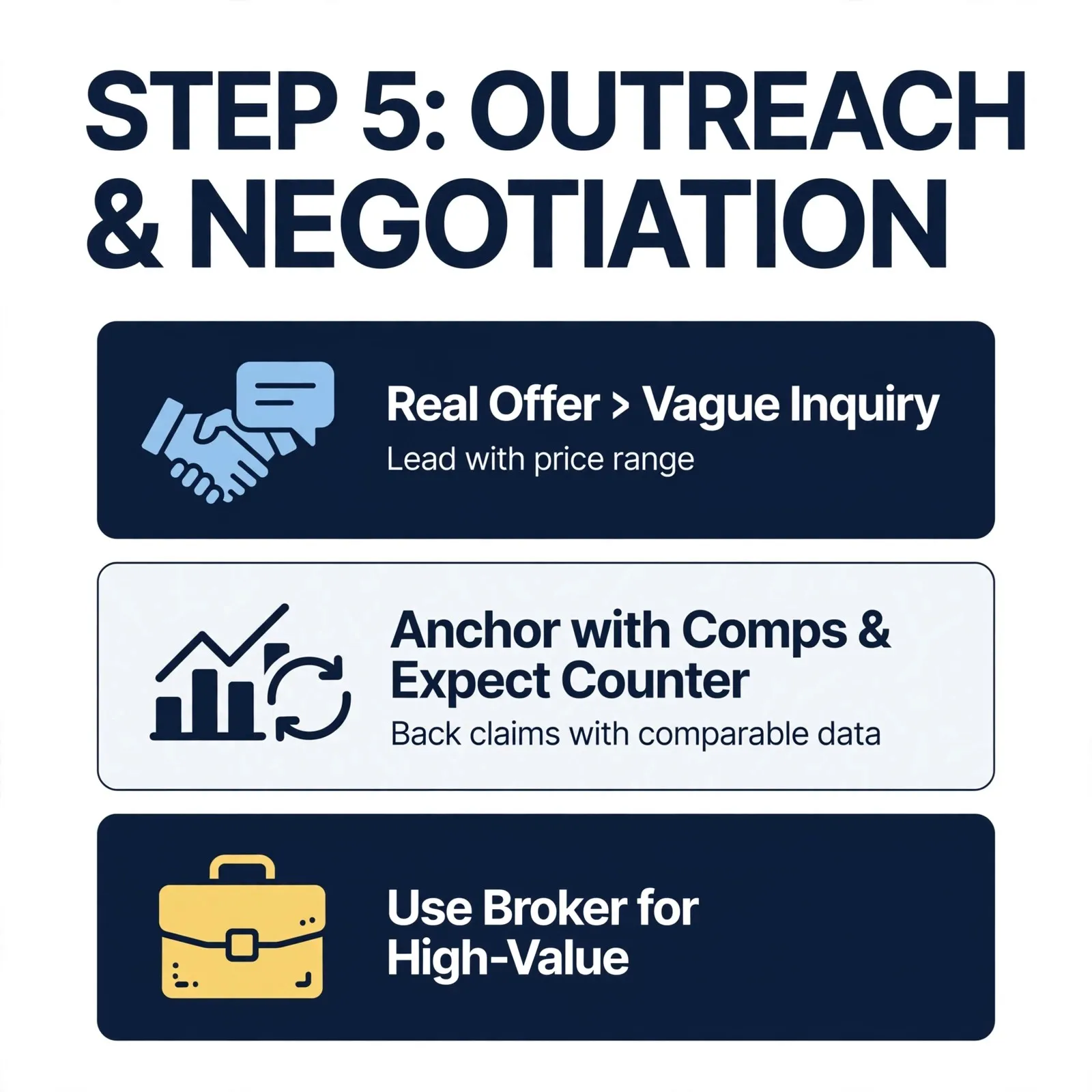
Negotiations on genuinely ultra-premium names can take anywhere from a few days to several months, particularly if the seller isn’t in a hurry.
Step 6: Structuring the Deal
a price is agreed, the structure of the deal still needs to be settled. Common structures include:
- Lump-sum payment, the most common approach for domains under a certain price threshold
- Installment or payment-plan agreements, more common for six-figure and above acquisitions
- Lease-to-own arrangements, occasionally used when a buyer wants to test a name’s performance before committing fully
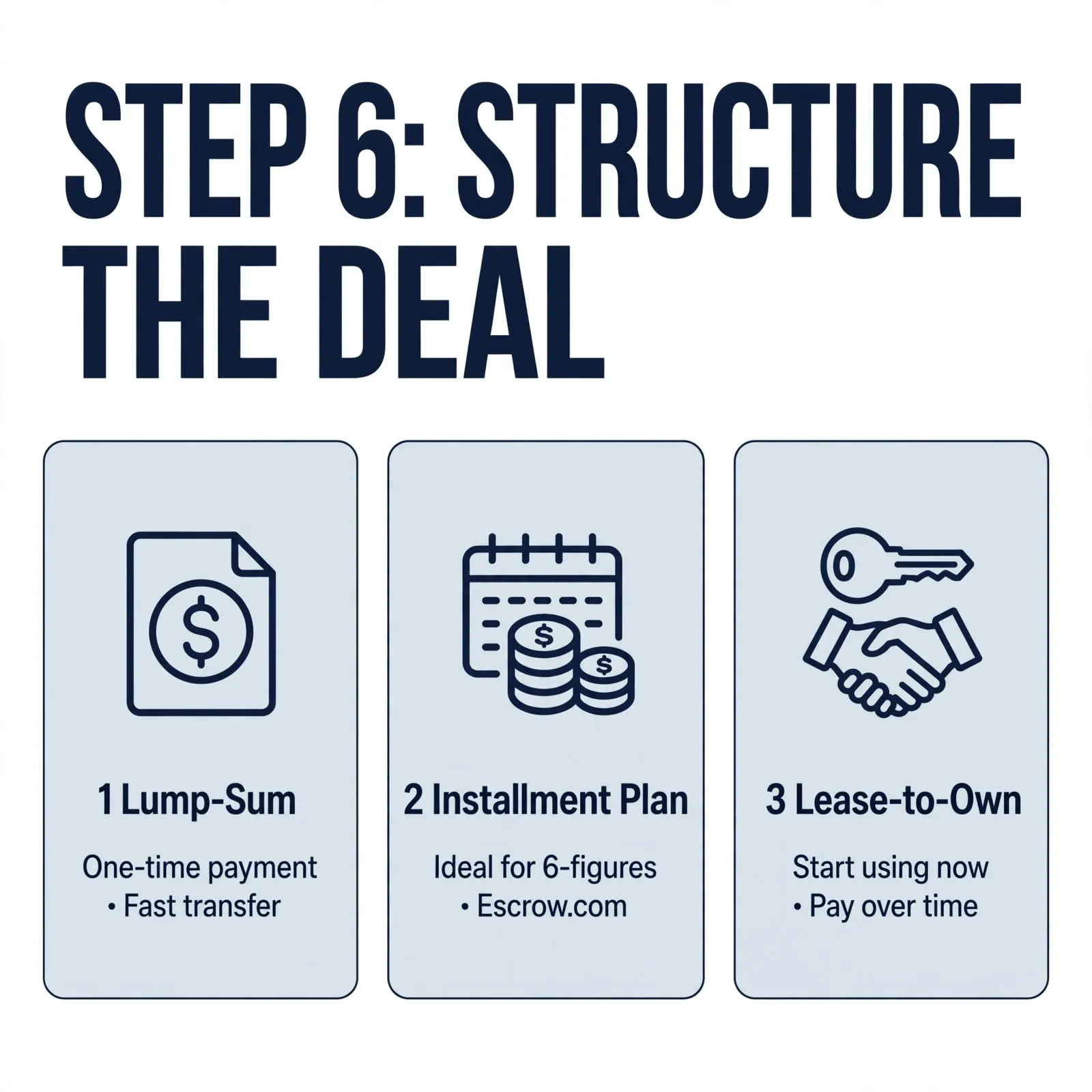
Whichever structure you choose, get the terms in writing before funds move, including the exact domain, the final price, the payment schedule, and which party pays escrow and transfer fees.
Step 7: The Secure Transfer Process
This is the step where deals most commonly go wrong for inexperienced buyers, and it’s also the one buyers most often ask about when researching how to buy an ultra-premium domain safely.
Never wire funds directly to a seller for a domain purchase. Instead, use a licensed domain escrow service. The standard secure transfer sequence looks like this:
- Buyer and seller agree on terms and open an escrow transaction
- Buyer deposits funds into the escrow account
- Escrow service confirms funds have cleared
- Seller pushes the domain to the escrow provider’s registrar account, or initiates an authorized transfer
- Escrow service confirms the domain has been received and verifies it matches the agreed name
- Domain is transferred to the buyer’s registrar account
- Escrow service releases funds to the seller only after the buyer confirms receipt
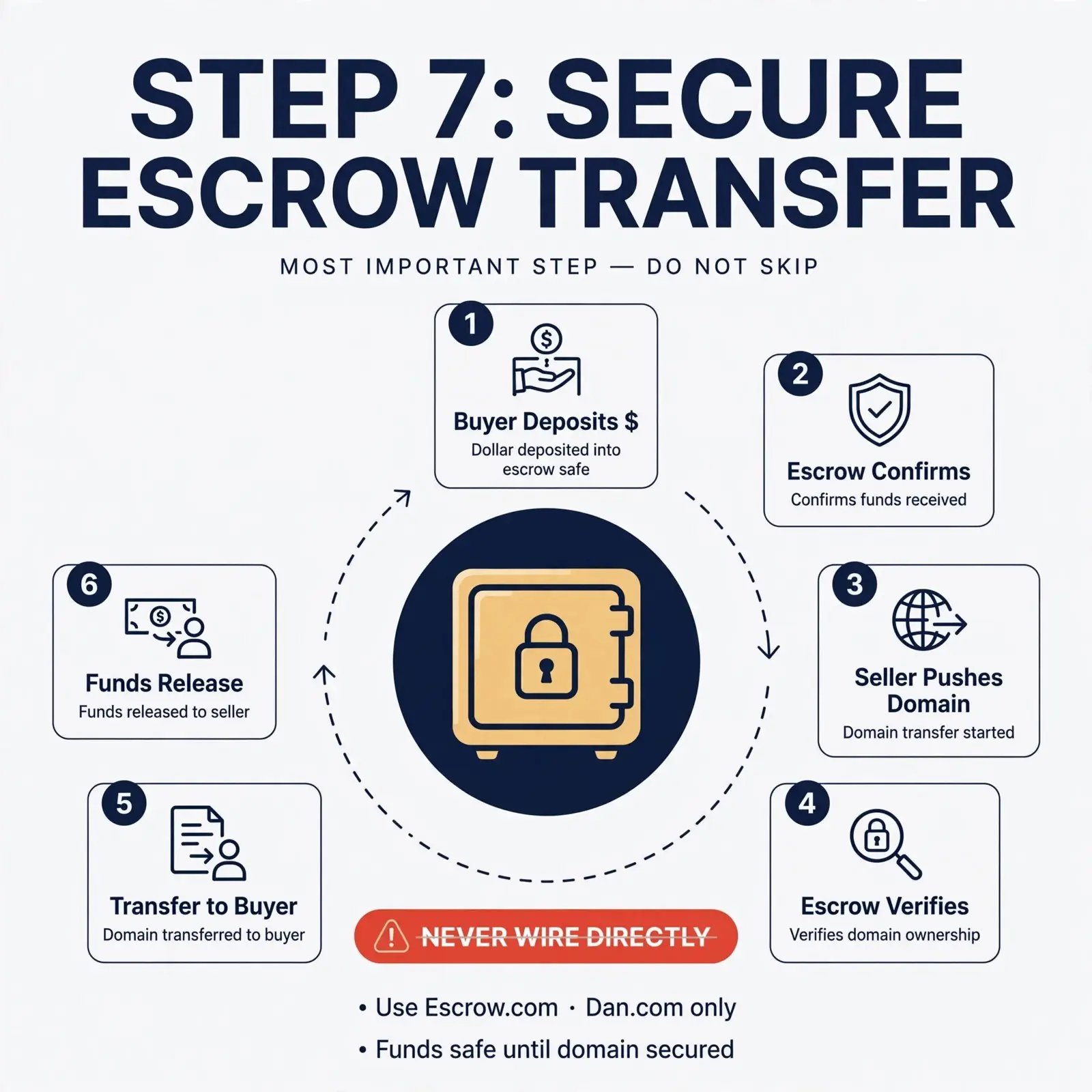
This structure protects both sides: the seller isn’t at risk of shipping the domain without payment, and the buyer isn’t at risk of paying without receiving a clean transfer.
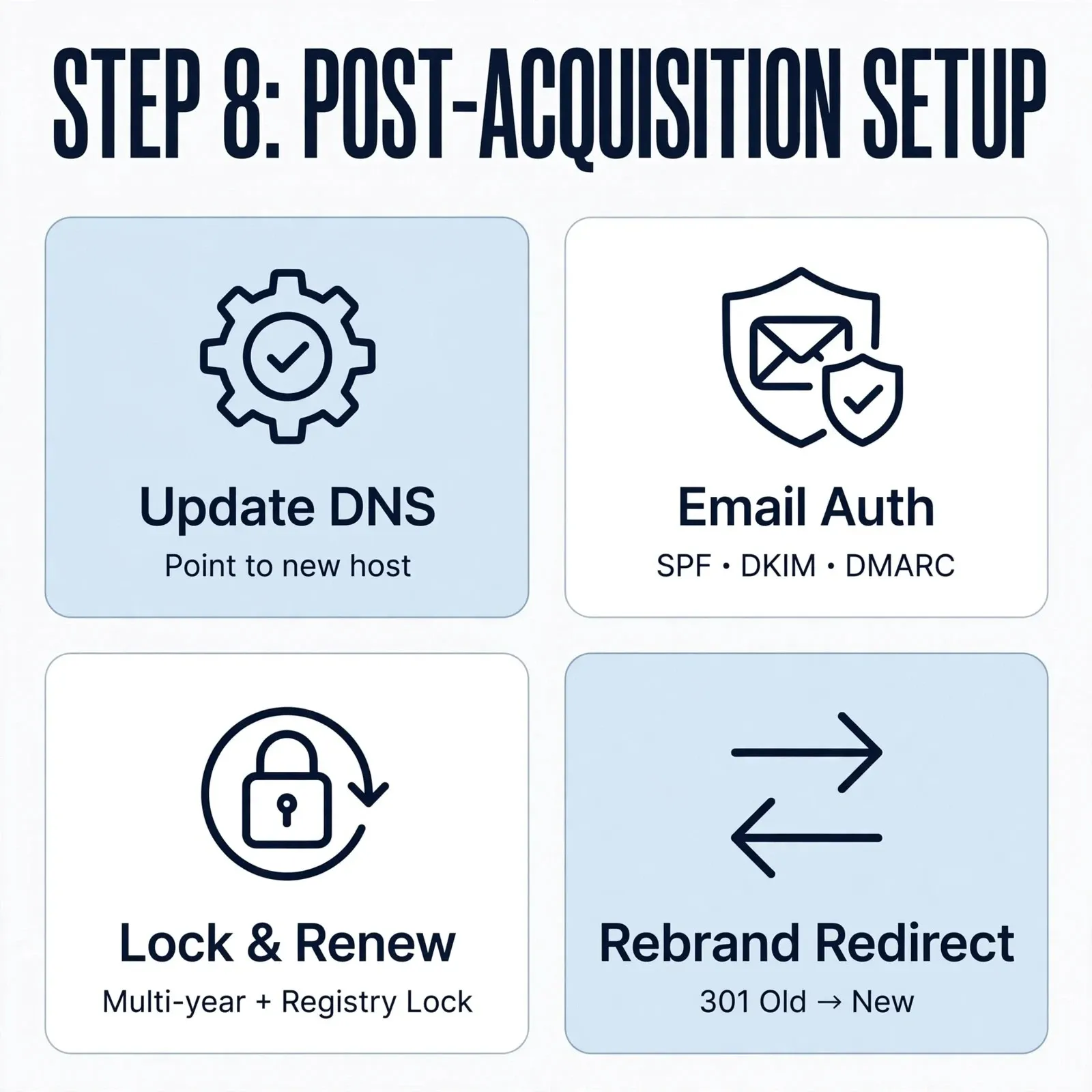
Step 8: Post-Acquisition Setup
Once the transfer completes, a few final steps ensure the domain is actually usable:
- Update DNS records to point to your hosting or website builder
- Set up email authentication (SPF, DKIM, DMARC) if you’ll be sending mail from the domain
- Renew the domain for multiple years to lock in ownership continuity
- Enable registry lock or registrar-level transfer protection to prevent unauthorized future transfers
- Begin any rebranding or redirect work if the domain is replacing an existing site
Common Mistakes to Avoid When Buying an ultra-Premium Domain
Even experienced buyers occasionally slip up. Some of the most frequent and costly mistakes include:
- Skipping escrow to “save time” or fees, which is consistently the single riskiest shortcut in the entire process
- Not verifying trademark conflicts before finalizing a deal
- Negotiating without a clear budget ceiling, leading to overpayment driven by momentum rather than value
- Assuming the first asking price is final, when most premium sellers expect and anticipate negotiation
- Rushing the transfer step, particularly with international sellers where registrar transfer rules differ
- Failing to get the agreement in writing, leaving no recourse if either side changes terms mid-transaction
Expert Tips for a Smoother Ultra-Premium Domain Acquisition
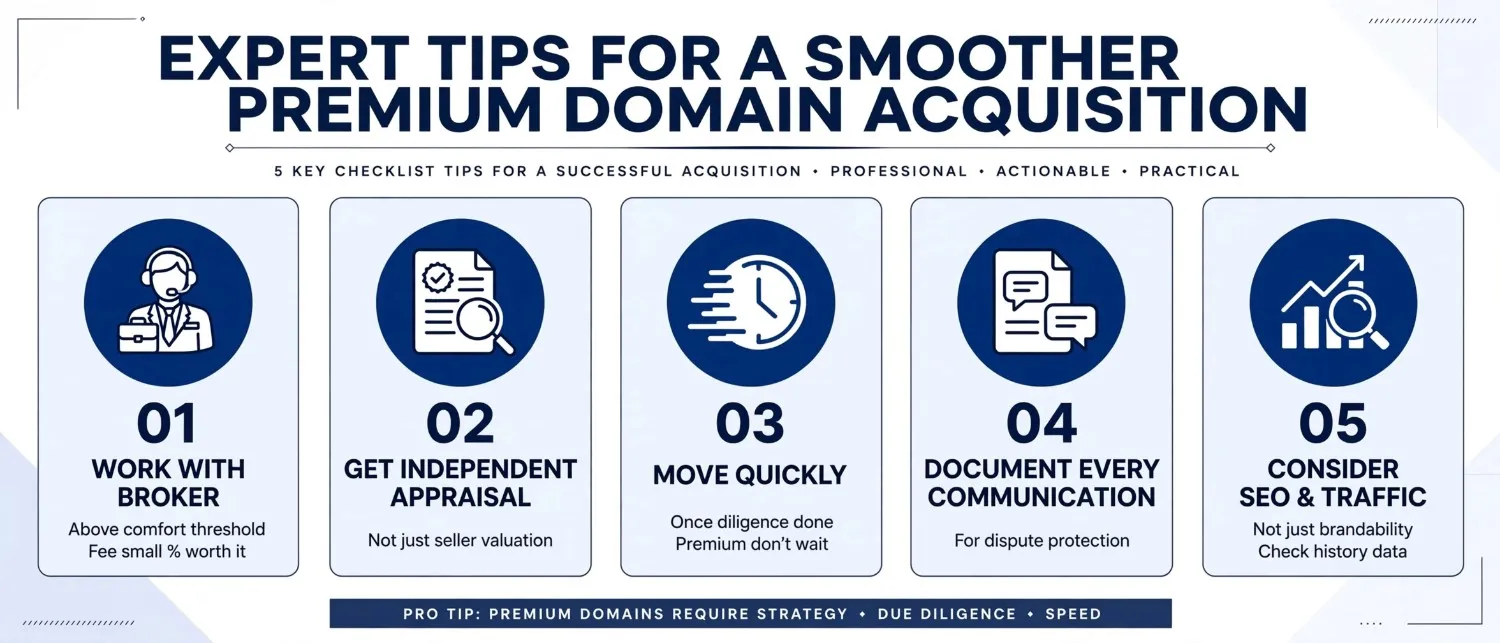
- Work with a broker for anything above your comfort threshold. Their fee is typically a small percentage of the deal, and the experience they bring to negotiation and transfer logistics is usually worth far more than that cost.
- Get an independent appraisal if you’re unsure whether an asking price reflects real market value, rather than relying solely on the seller’s own valuation.
- Move quickly once you’ve done your diligence. Ultra-premium domains, unlike generic inventory, don’t wait around; a hesitant buyer often loses the name to a faster one.
- Document every communication with the seller in case a dispute arises later.
- Consider the domain’s SEO and traffic history, not just its brandability, since an existing domain with authority can accelerate your search visibility from day one.
Domain Acquisition Cost Comparison
| Domain Category | Typical Price Range | Common Buyer Profile |
|---|---|---|
| Short brandable .com (4–6 letters) | $5,000–$50,000 | Startups, rebrands |
| Single dictionary word .com | $50,000–$500,000+ | Established brands, investors |
| Two-word exact-match keyword .com | $2,000–$25,000 | SMBs, niche businesses |
| Premium ccTLD equivalent | $1,000–$20,000 | Regional or local businesses |
| Ultra-premium one-word .com | $500,000+ | Large enterprises, funded startups |
Escrow vs. Direct Payment: A Transfer Method Comparison
| Factor | Licensed Escrow Service | Direct Payment to Seller |
|---|---|---|
| Fraud protection | High; funds held until domain confirmed | Low, no recourse if seller doesn’t deliver |
| Industry standard | Yes, expected for any serious transaction | No, considered a red flag by experienced buyers |
| Cost | Small percentage fee, usually split | None, but far riskier |
| Dispute resolution | Built into the escrow process | Requires separate legal action |
| Recommended for | Any transaction above a few hundred dollars | Not recommended for premium domain purchases |
Frequently Asked Questions
How much does it typically cost to buy an ultra-premium domain?
Prices vary enormously based on length, extension, and keyword value, ranging from a few thousand dollars for a solid brandable name to seven figures for rare, single-word .com domains.
Is it safe to buy an ultra-premium domain directly from the owner?
Yes, as long as the transaction is routed through a licensed escrow service rather than direct payment, which protects both the buyer and seller throughout the transfer.
How long does the ultra-premium domain acquisition process usually take?
Most transactions close within four to twelve weeks, though negotiations on highly sought-after names can extend longer if the seller isn’t in a rush to sell.
What’s the difference between buying an ultra-premium domain and registering a new one?
Registering a new domain means claiming an unowned name directly through a registrar, while buying an ultra-premium domain means negotiating a purchase from an existing owner, similar to acquiring an asset rather than simply signing up for one.
Do I need a broker to buy an ultra-premium domain?
Not always, but for higher-value acquisitions, a broker’s negotiation experience and access to off-market inventory often make the process faster, safer, and ultimately more cost-effective.
What happens if the seller refuses to use escrow?
Treat this as a significant red flag. Legitimate sellers of ultra-premium domains are familiar with escrow and expect it; refusal to use one is one of the clearest warning signs of a potential scam.
Conclusion
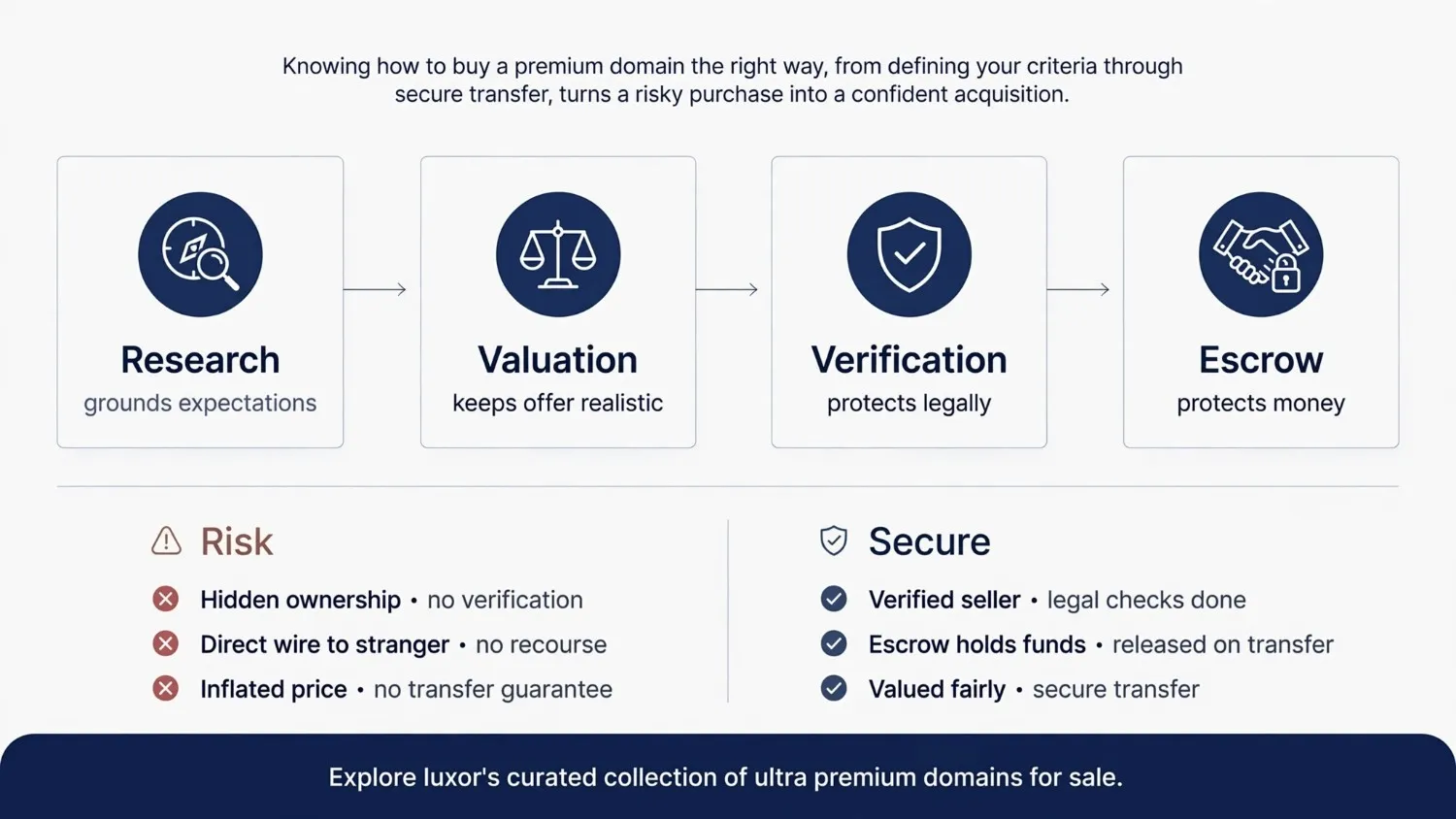
Knowing how to buy an ultra-premium domain the right way, from defining your criteria through secure transfer, is what turns a risky, ad-hoc purchase into a confident, well-protected acquisition. Every step matters: research grounds your expectations, valuation keeps your offer realistic, verification protects you legally, and escrow protects your money. Skip any one of these, and you’re exposed in ways that are far more expensive to fix after the fact than to prevent upfront.
Pingback: Domain Name for New Business: Why It's Hard to Undo